
The first visit to any scanning electron microscopy lab may seem like an entrance to the world of micro-wonders.
Unlike seeing things using light, this lab involves the use of electrons to reveal the elaborate surfaces of materials, even at the nanometer scale.
Such accuracy fosters curiosity and confidence among scientists, enabling them to investigate a wide range of topics, including metal fractures and insect wings.
What Does a Scanning Electron Microscopy Lab Do?
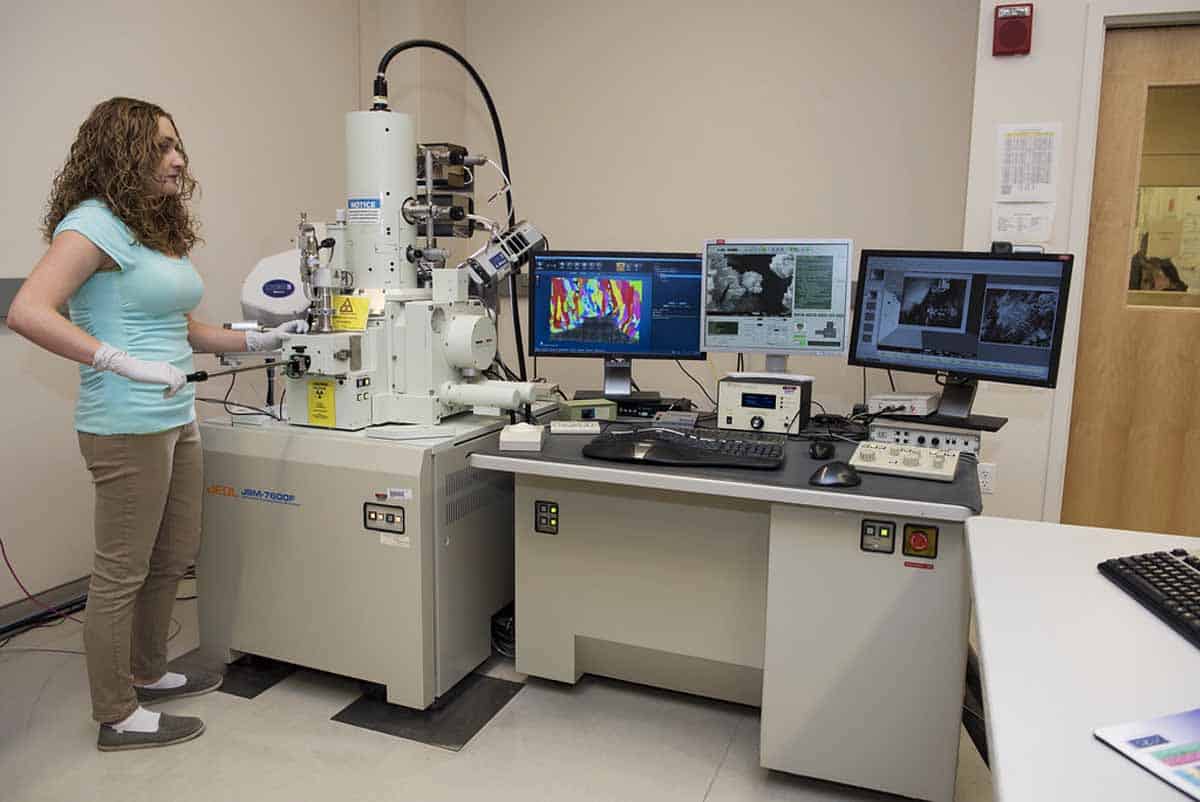
A normal scanning electron microscope will examine lab specimens that are prepared and mounted in a chamber.
A focused beam of electrons is scanned across the sample. These electrons are reflected as the sample emits signals, either secondary or backscattered electrons, which are captured by the detectors.
The result is breathtaking, high-resolution pictures that demonstrate surface structure and texture.
The Role of a Scanning Electron Microscopy Lab to Scientists
Table of Contents
ToggleHigh Resolution and Depth of Field
The technology used in this lab allows you to zoom in thousands, even millions of times beyond the capability of light microscopes. It allows clear visualization of cracks, pores, or microbiological structures.
3D Surface Visualization
The photographs appear in 3D due to the increased depth of field. A scanning electron microscopy lab allows you to observe the contours and textures in sharp detail, making it ideal for understanding surface structures.
The Insight of the Elemental Composition
The image of the surface is not the only result the laboratory offers. In the case of SEM-EDS (Energy Dispersive Spectroscopy), the lab can determine what elements are present on the surface.
This capability is especially valuable in products, electronics, and forensic investigations.
Wide-Ranging Applications
A scanning electron microscopy laboratory supports research across many fields.
-
Materials Science: Investigation of material failure mechanisms, grain boundaries, and fracture surfaces.
-
Biology: Examination of the textures of cell surfaces, bacteria, or tissues.
-
Forensics: Analysis of fingerprints, micro-minerals, fiber examination, or fired bullets. It can also detect prints, trace minerals, fibers, or gunshot residues.
-
Nanotechnology: Defining nanoparticles, nanowires, and coatings.
How Samples Are Prepared
In a scanning electron microscopy lab, preparation is usually essential. Samples may require a thin, electrically conductive layer, such as a gold or carbon layer, to prevent surface charging by electrons.
Some labs with environmental scanning electron microscopes (ESEMs) can examine wet or poorly conducting specimens without the need for coating. Proper preparation decreases charging, improves clarity, and protects sensitive samples.
Technology and Competence
A scanning electron microscopy laboratory uses equipment that requires skilled operation and maintenance. Training is essential.
Users learn to control the electron beam voltage, focus, and scan templates. They also develop the ability to identify signals, analyze image data, and read EDS results. Despite modern automation, achieving accurate outcomes still depends on expert handling.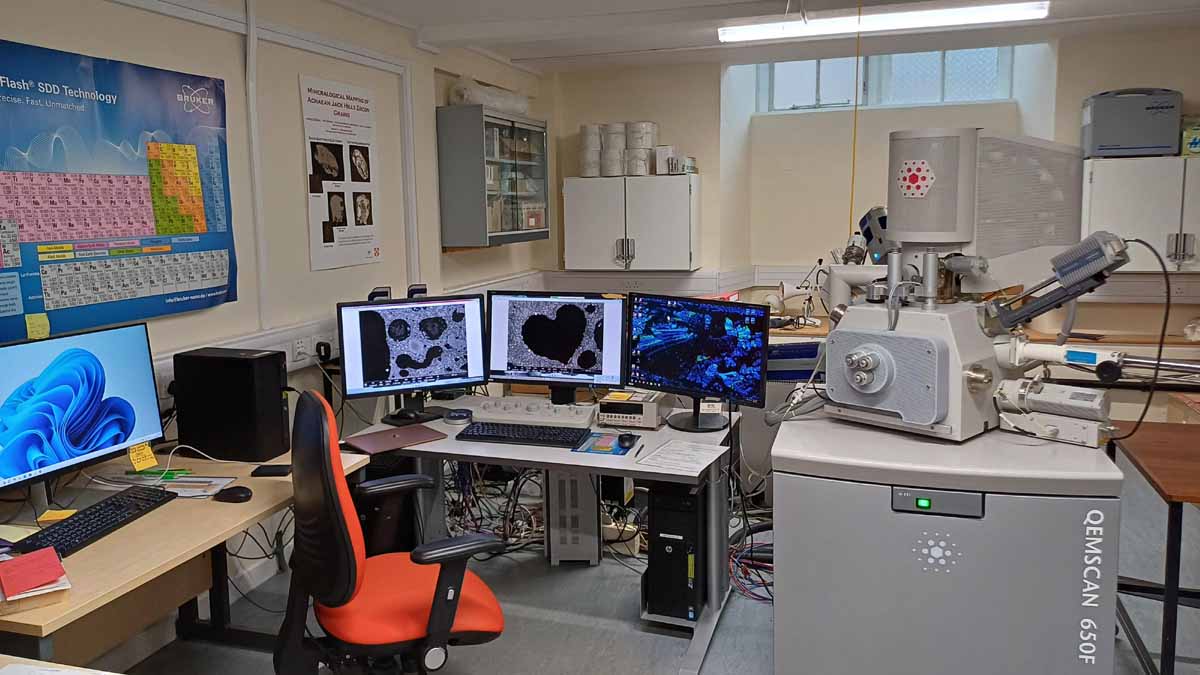
Lab of the Future
Scanning electron microscopy continues to advance.
-
Technology has become more accessible to smaller labs and classrooms with the introduction of benchtop SEMs.
-
Imaging has improved with AI, maximizing data collection and resolution.
-
In situ experiments now allow observation of real-time changes in materials, such as heating or hydrating them.
Final Thoughts
A scanning electron microscopy lab represents a powerful blend of science and technology in the finest detail. It opens up new surfaces and structures that were previously unknown.
This lab is essential for modern research, from advanced sample preparation to elemental analysis and high-resolution imaging.
Whether you study microscopic cells or tiny fractures in metals, the SEM lab reveals incredible details that can expand what you see and what you imagine beyond the human eye.

