The Legend of Zelda series began in the 1980s and quickly grew into one of gaming’s most beloved and influential franchises. From its origins on the 8-bit Nintendo Entertainment System to the groundbreaking 3D adventures on the Nintendo 64, early Zelda titles established many of the gameplay conventions and storytelling techniques that define the series. In this nostalgic retrospective, we’ll explore the creation of the original The Legend of Zelda (1986) and the inspirations behind its open-world design, the innovative features and challenges of those early games (like the introduction of battery-backed saving), and how each major title through the year 2000 built upon its predecessors. We’ll also look at the cultural impact of these games – their critical reception, influence on other media and game design – and share some fun facts about recurring themes (the Triforce, Ganon, dungeons) and Easter eggs. Finally, we’ll draw a line from the series’ roots to the modern Zelda epics (Breath of the Wild, Tears of the Kingdom), seeing how the spirit of discovery from the early years continues to resonate today.
Origins of The Legend of Zelda (1986) – Creation and Inspiration
The original The Legend of Zelda was conceived by Nintendo’s Shigeru Miyamoto and Takashi Tezuka as a new kind of console game – one that emphasized open-ended exploration in a fantasy world. Miyamoto, in particular, drew on his childhood experiences roaming the Japanese countryside – venturing into forests, finding hidden lakes and caves – and wanted to capture that feeling of awe and discovery in a video game. Zelda’s design reflects this inspiration: rather than a linear sequence of levels, it presents a broad overworld full of secrets, where players can wander freely and stumble upon dungeons or treasures in any order. This open-world concept was quite fresh for mid-1980s consoles, which mostly offered linear arcade-style games. As Miyamoto later explained, the goal was to recreate the sensation of “getting lost” on an adventure and the excitement of finding something unexpected – emotions he remembered from his own boyhood explorations.
Miyamoto and Tezuka crafted a simple yet evocative story to underpin this sense of adventure. The hero, a young boy named Link, must collect the shattered pieces of the mystical Triforce of Wisdom and rescue Princess Zelda from the evil Ganon. This straightforward fantasy tale (inspired by fairy tales and authors like Tolkien) provided just enough context to motivate the player, while allowing gameplay to take center stage. Notably, the name “Zelda” itself was inspired by American novelist F. Scott Fitzgerald’s wife, Zelda Fitzgerald – Miyamoto thought her name sounded “pleasant and significant” for a princess. It was the first of many real-world inspirations that the developers wove into the series’ lore.
Innovations and Challenges in the Original Game
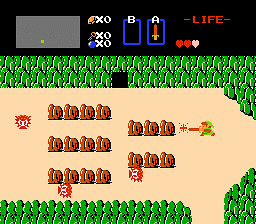
The first Legend of Zelda pushed technical boundaries and introduced new ideas that would set the tone for the series. It debuted in 1986 on the Famicom Disk System in Japan, which allowed the game to be larger in scope (the disk format held 112KB of data) and, crucially, enabled players to save their progress – a first for console games at the time. When Zelda was released on cartridge for the NES overseas the following year, Nintendo included a then-novel battery backup to retain save data, marking one of the earliest uses of battery-backed saving on a cartridge game. This innovation freed players from having to restart every session and was vital for a grand adventure game – it meant the world of Hyrule could be persistently explored over many play sessions, a radical shift from the quick arcade-style play of most mid-80s console titles. (Battery-backed cartridges soon became standard for RPGs and other lengthy games as well.)
Designing such an open-ended adventure presented unique challenges. During play-testing, Nintendo’s management grew concerned that players might feel lost or frustrated in Zelda’s non-linear world. Early testers did indeed get confused by the maze-like dungeons and lack of hand-holding, prompting some nervousness inside the company. Miyamoto’s response, however, was bold: instead of adding more guidance, he actually made the game slightly more difficult. Famously, he decided not to give the player a sword at the start of the game – you begin unarmed, and must find the sword in a cave after talking to an old man. This counter-intuitive design (memorialized by the iconic line “It’s dangerous to go alone! Take this.”) forced players to think and explore from the very first moments. Miyamoto hoped it would also encourage schoolyard discussion and communication among players: sharing tips, secrets, and discoveries about where to find items or how to solve puzzles. This approach turned out to be a masterstroke – rather than alienating gamers, the mystery of Zelda’s world pulled them in. Players took on the challenge with enthusiasm, swapping dungeon maps and hidden clues with friends. Far from being bored or discouraged, audiences were captivated by this new style of gameplay that trusted them to find their own way.
When The Legend of Zelda released worldwide in 1987, it was a blockbuster. The NES version (with its shiny gold cartridge) sold over 6.5 million copies and became the first NES title to sell a million units in the West. Critics and players were enthralled by the game’s sense of scale, freedom, and adventure. It introduced console gamers to a style of play previously seen mostly in computer RPGs – a non-linear quest with an emphasis on exploration, inventory management, and gradual character growth (through finding heart containers and better equipment). By shifting the goal from achieving a high score to experiencing a grand journey, Zelda fundamentally changed what a console game could be. Its success proved that players were ready for deeper, narrative-driven games on consoles. In Japan, contemporary developers at Enix and Square took note – the success of Zelda helped pave the way for the rise of console RPG franchises like Dragon Quest and Final Fantasy, which introduced even more RPG mechanics (turn-based battles, experience points) to home consoles soon after.
Even today, fans can still pick up a working NES cartridge of the original Legend of Zelda—one of the very first battery-backed console games—through Japan-based proxy stores like TanukiShop.
Zelda II: The Adventure of Link (1987) – A Bold Departure
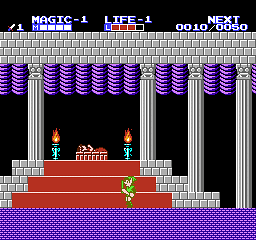
Nintendo followed up the original Zelda with a sequel in 1987/88 that took the franchise in an unexpected direction. Zelda II: The Adventure of Link is remembered as the series’ black sheep – a game that broke the mold established by its predecessor and experimented with new gameplay styles. Rather than the top-down action view of the first game, Zelda II features a mix of a bird’s-eye overworld map and side-scrolling action scenes. When Link enters a palace, a town, or a battle encounter, the perspective switches to a 2D side view, turning the game into a platformer/brawler hybrid. In these side-scrolling segments, Link can jump, swing his sword in mid-air, and even learn up-thrust and down-thrust attacks – mechanics reminiscent of classic action games. This was a significant shift for the series, injecting a dose of arcade-style combat into the adventure formula.
In addition to action platforming, Zelda II introduced explicit RPG elements such as experience points and leveling up. Defeating enemies grants XP, which Link can use to improve his attack, magic, or health statistics. This made Zelda II one of the earliest action-RPG hybrids on consoles. It also included a suite of magic spells that Link can learn (e.g. Shield, Jump, Life) to aid his quest. Townsfolk populate the villages in Zelda II, marking the first time the series had friendly NPCs to talk to in-game – some of whom give clues or tasks. These RPG-like additions deepened the gameplay but also made Zelda II more complex and challenging than the first game. Players now had to manage stats, converse with villagers, and tackle tough side-scrolling combat sequences. Notably, Zelda II is also the only series entry with a traditional “lives” system – Link can run out of lives and see a Game Over screen (accompanied by the ominous message “Return of Ganon” and a demonic laugh), a feature not seen in later Zeldas.
While successful in its time (it sold well and reviewed solidly), Zelda II garnered a mixed legacy among fans. Some appreciated its brave experimentation – its influence can be seen in later side-scrolling action-adventures – whereas others missed the open-ended exploration of the original. With its higher difficulty and unorthodox design, many new players found Zelda II quite hard. Over the years, however, the game has attained a cult respect for its uniqueness. It also contributed enduring pieces to Zelda lore: the idea of Link’s shadowy doppelgänger (the final boss is Dark Link), and a story setup where Princess Zelda has fallen under a sleeping spell (establishing the in-universe notion that many princesses are named Zelda in a lineage). Fun fact: in Zelda II’s towns you meet villagers with seemingly generic names like Ruto, Rauru, and Saria – years later, Ocarina of Time would honor this game by naming several of its sages after those town names. And who can forget the famous NPC line “I am Error.” from Ruto Town – a quirky translation oddity that became a beloved inside joke among Zelda fans. Despite its differences, Zelda II demonstrated that Nintendo was willing to take risks with the franchise. Future games would revert to the top-down style, but also integrate some of Zelda II’s lessons (for example, the idea of Link learning new sword techniques or magic would resurface in later titles).
For dedicated collectors, tracking down an original Japanese Famicom (NES) cartridge—with its distinctive gold casing—is half the adventure. Reliable listings regularly appear on TanukiShop, which aggregates Yahoo! Auctions lots and ships worldwide.